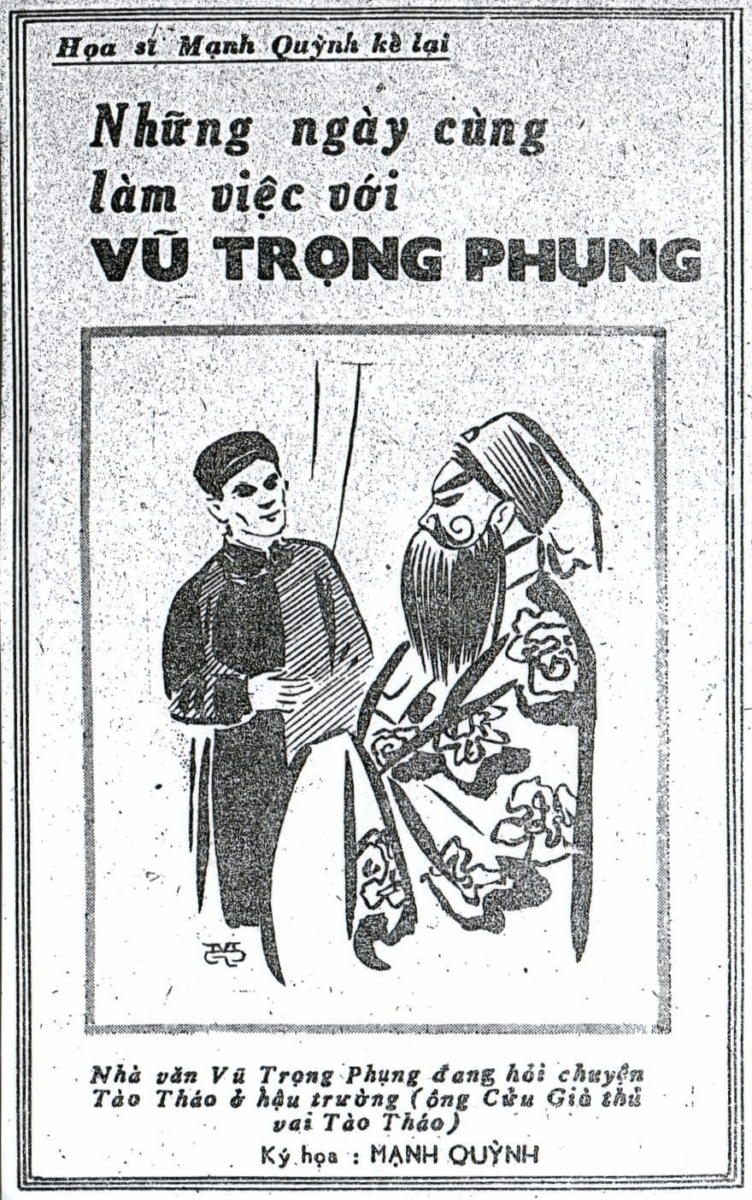
Many people recognize the image of “the king of reportage in the North” through the iconic portrait of Vũ Trọng Phụng in a Western suit. However, in artist Mạnh Quỳnh’s memory, the writer always wore traditional Vietnamese clothing and carried the demeanor of a rural schoolteacher.

In 1936, artist Mạnh Quỳnh briefly worked with the late writer Vũ Trọng Phụng: while the writer gathered material for his reportage Smearing the Clown, Mạnh Quỳnh was invited along to provide illustrations.
This memorable collaboration was briefly recounted by the artist on December 6, 1987, during a commemorative event celebrating the 75th anniversary of the writer’s birth, hosted by the Notable Figures Club at the Vietnam–Soviet Friendship Cultural Palace. Alongside Mạnh Quỳnh, several poets, writers, and former colleagues of the author also shared their memories.

sought out artist Mạnh Quỳnh at his home with a request: “Your story was too brief. Could you tell me more?”
Understandingly, he paused his work for Little Flowers, a children’s TV program on Vietnam Television, and began to recount:
“In 1936, both Vũ Trọng Phụng and I were contributing to Phụ nữ Thời đàm (Contemporary Women) newspaper on Hàng Bồ Street, backed by a businessman. He wrote, I drew, and our acquaintance grew into a friendship. One day, Phụng asked me to illustrate his reportage Smearing the Clown.
He was collecting material at Quảng Lạc Theater, a famous venue then, known for its performers from both the North and South. He chose to focus on the backstage world, shedding light on those who sold their voice, talent, and energy yet could barely make ends meet. Many, he noted, succumbed to opium addiction.
Phụng was punctual. At 7 p.m., when I arrived, he was ready. He took a puff of pipe tobacco—perhaps to sharpen his focus—and we went on our way.
He would talk to performers while they were dressed for their roles but not yet on stage or during their breaks. He asked a lot, but jotted down little in a small notebook. I didn’t follow his questioning too closely, as I had to sketch my own references at the same time. Being new to the profession, I often struggled—drawing and redrawing before I could compile a final illustration at home.
After his death, newspapers ran a photo of him in a Western shirt. But throughout the time I knew him, he wore traditional clothing: loose trousers, long robe, turban, and Gia Định shoes. He looked and acted like a village schoolteacher—a hương sư, as we called them back then.”

Even his mannerisms, Mạnh Quỳnh said, resembled those of a modest teacher. He wasn’t particularly talkative, but that didn’t mean he was reserved. His social circle included very gregarious characters like Trưởng Tạo—a loquacious man from Du Lâm village near Cầu Đuống. Tạo, who once played a supporting role in the silent film The Tale of Lady Đế shot in Đồ Sơn, seemed to know everything from astronomy to human affairs. Tạo became the inspiration for the character Ấm B. in Phụng’s Trap for Men (Cạm Bẫy Người).
Artist Mạnh Quỳnh recalled one evening gathering outside the cải lương theater (later Kim Chung Theater) on Hàng Bạc Street where Trưởng Tạo held court. It was there he realized Phụng never gambled; he only followed Ấm B. to observe or gather material for his stories.
Despite being a famous author by then, Phụng’s modest appearance meant that people often did not recognize him as a writer. “I myself didn’t know who he was when we first met at the newspaper office,” Mạnh Quỳnh said. “At the time, there were self-proclaimed journalists who dressed the part—toting oversized briefcases and foreign-printed business cards reading ‘Mr. X, journalist…’—without having written a single article.”

When Smearing the Clown was published, it only ran for a few issues before the newspaper folded. Afterward, Mạnh Quỳnh rarely saw Phụng again. One day, returning from a drawing trip, he read in the paper that “writer Vũ Trọng Phụng has passed away.” The flame of a brilliant pen was suddenly extinguished—a tragic loss.
“Even now,” he said, “when I pass through Hàng Bạc (at the Tạ Hiện intersection) or Hàng Bồ near the Lao Động newspaper office, I vividly remember the simple figure of that ‘hương sư’. I almost hear him again: ‘Be at Quảng Lạc Theater tomorrow night at 7 sharp!’”
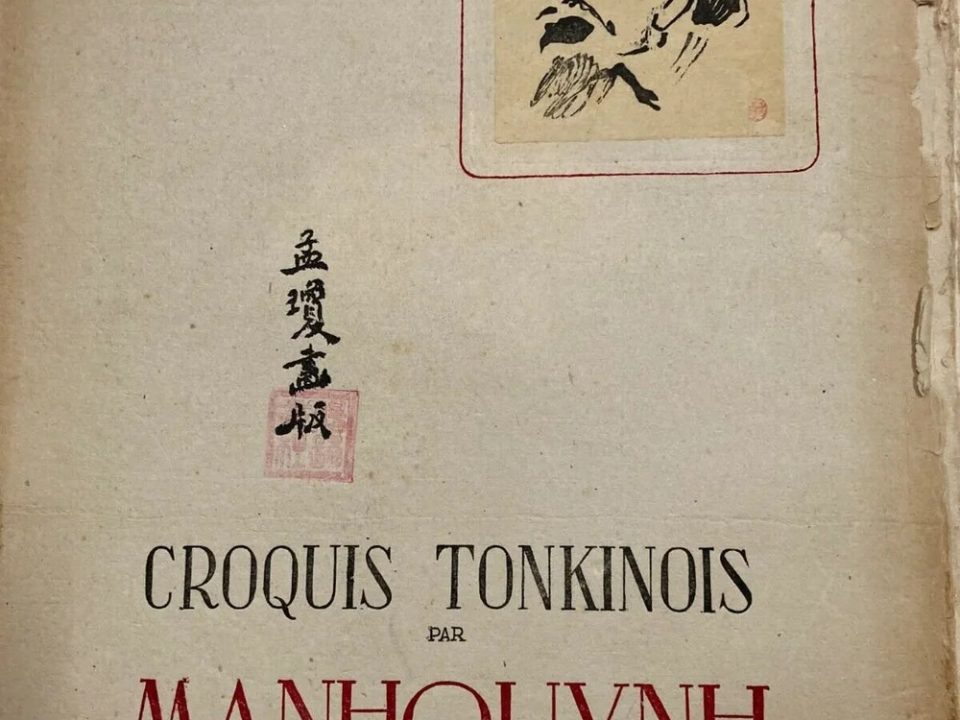
Artist Ngô Mạnh Quỳnh (1917–1991), a graduate of the École des Beaux-Arts de l’Indochine (1942, Lacquer Painting Department), was active in journalism even before entering art school. Aside from painting, he contributed illustrations to many publications, including Kim Vân Kiều, Lục Vân Tiên, and La Fontaine’s Fables.
Original link: https://luxuo.vn/culture/nha-van-vu-trong-phung-qua-loi-ke-cua-hoa-si-manh-quynh.html