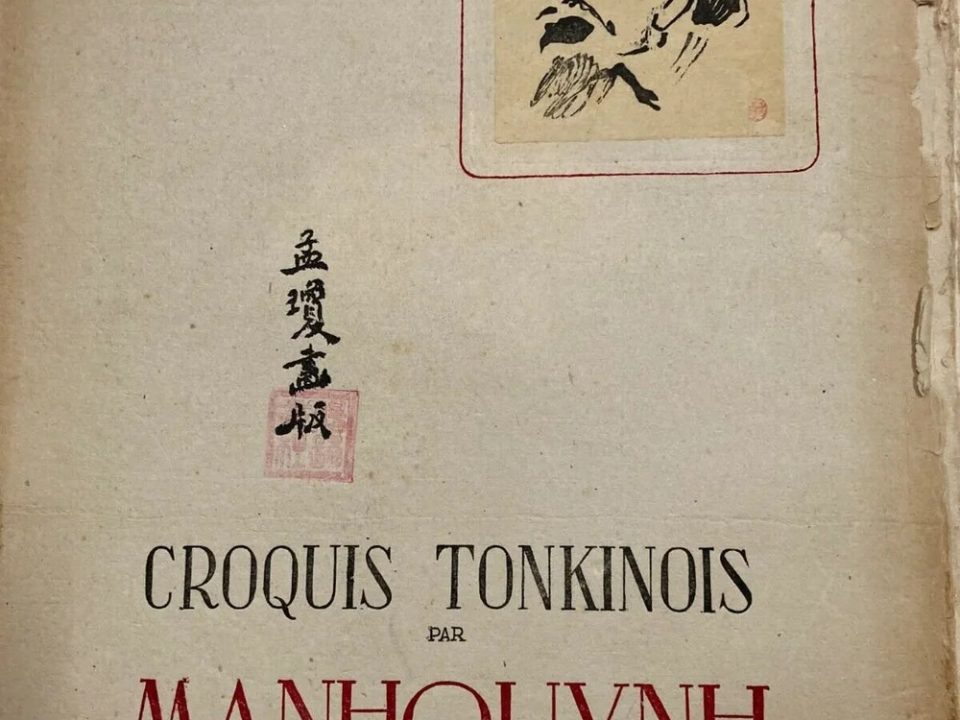
When people mention Ngô Mạnh Quỳnh, they often think of the wartime banknotes, resistance bonds, or the first engraved postage stamp featuring President Hồ Chí Minh—created by him and his younger brother, artist Ngô Đình Chương.
Breathing Vietnamese Soul into French Fables
Ngô Mạnh Quỳnh spent most of his life in Hanoi. His father, originally from Chương Mỹ (former Hà Tây), worked as a secretary for the Yunnan Railway Office at Hàng Cỏ Station. Because of his position, people simply called him “Mr. Clerk.” Quỳnh was the second child in the family—his elder sister died young, and he had a younger sister and three younger brothers. At 17, already well known for his artistic talent, he had his work published in newspapers. This eventually convinced his father to let him enter the École des Beaux-Arts de l’Indochine.
During the French colonial era, Mạnh Quỳnh collaborated with various newspapers and literary publications. His illustrations for La Fontaine’s fables were particularly captivating, blending French literature with distinct Vietnamese character. In his edition of The Tale of Kiều, he portrayed modern women wearing the “Cát Tường” áo dài—a precursor to the modern Vietnamese long dress.
“Students partly remember La Fontaine thanks to his (Mạnh Quỳnh’s) illustrations,”
– Poet Vũ Đình Liên
“My father was considered a pioneer of comic art in Vietnam. At 17 or 18, he was already drawing the Kaoco comic,” said his son, Ngô Quỳnh Dũng. “Later, he created the first animated film on paper, Thạch Sanh, and founded the first children’s puppet troupe.”
Talented, imaginative, and disciplined, Mạnh Quỳnh quickly gained fame in the artistic community. His art leaned toward humanism. As early as 1944–1945, he painted visions of reformed village life, with nurseries, sports fields, and cultural halls. He also criticized outdated customs—one example is a painting of villagers feasting at the funeral of a local official who died from cholera.
He loved children, edited the Children’s Life supplement, and organized activities to encourage sports and cultural engagement for kids. Perhaps it was this love that led him to father nine children.

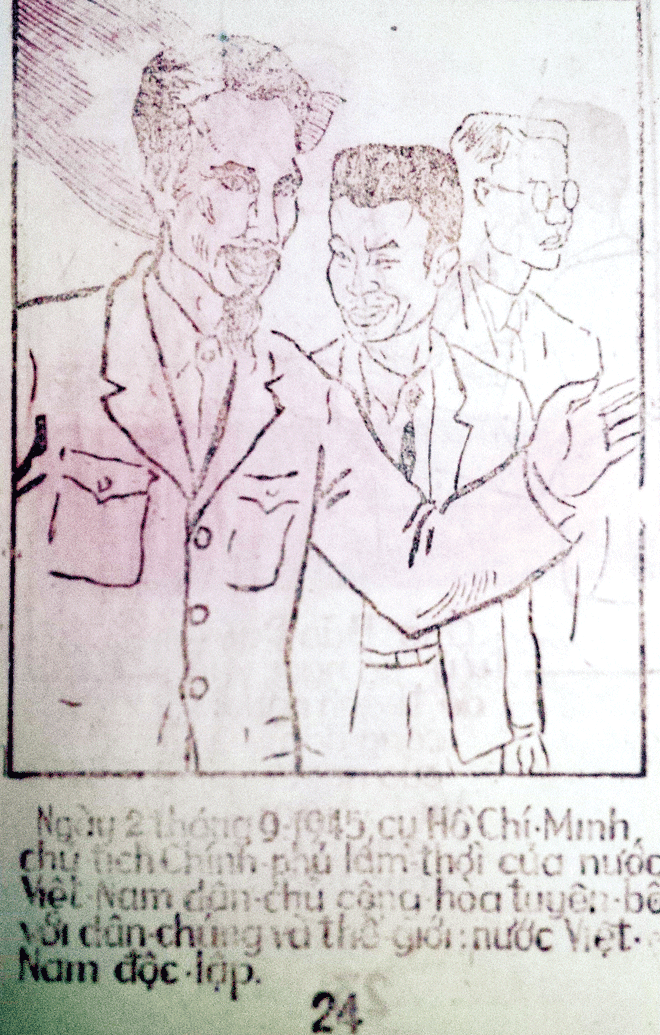
A Sketch of President Hồ Chí Minh
“My father once sketched President Hồ Chí Minh at Bắc Bộ Phủ,” recalled his son, Ngô Quỳnh Hưng. “When he asked for a signature on the drawing, Bác laughed and said, ‘I’m not the artist, so why should I sign?’ But he still wrote ‘Hồ Chí Minh’ on the picture. That precious sketch now hangs in my brother Dũng’s house.”
After the August Revolution, very few people knew what President Hồ looked like. Quỳnh took it upon himself to create illustrated leaflets printed on dó paper, bearing Hồ’s portrait with the caption: “President Hồ Chí Minh, Head of the Provisional Government of the Democratic Republic of Vietnam.” He spread them throughout the country.


Later, he evacuated with his family alongside the Cultural Delegation and worked on printing literacy textbooks. As the resistance government banned Indochinese currency and called for public funding, the Quỳnh brothers were assigned to design and engrave two- and five-hào banknotes and resistance bonds. These notes bore the warning: “Those who counterfeit or damage government currency will be punished under military law.” The first postage stamp bearing Hồ’s portrait was also created during this time.
Mạnh Quỳnh returned to Hanoi before 1954. He worked tirelessly to support his large family—and secretly harbored resistance cadres. Hưng recalls one named Châu, who lost his right arm and posed as a student of Quỳnh’s.
“At one point, my father opened Mạnh Quỳnh Electropuppetry, specializing in string puppets. He even rented the Hanoi Opera House (then the Municipal Theater) for performances,” Hưng said. “But it was a financial disaster. He then turned to publishing a children’s illustrated magazine, Thiếu Niên họa báo, managing all the writing, illustrating, and distribution himself. I was often tasked with bringing the prints to Thời Mới Press on Bà Triệu Street. But again, it didn’t succeed financially.”

Sowing Seeds of Vietnamese Art
Dũng fondly recalls his father’s favorite saying: “Every street in Hanoi has at least two of my friends.” Quỳnh was speaking of the Old Quarter, but it was a testament to his wide circle.
Every Tết (Lunar New Year), he would visit all his friends. If they weren’t home, he left a handwritten message on his business card. Even when displaced, he never forgot to write holiday letters.
“Friendships must be sincere,” he taught his children. “If you promise, keep it—and always on time. Don’t make empty promises.”
After several failed business ventures, Mạnh Quỳnh opened a private art class at 29 Hàng Trống Street, together with fellow artists Đinh Minh and Phạm Viết Song. Students adored him. Many fondly recall sketching trips he organized to places like Cổ Loa, Láng, and Triều Khúc villages. In 1960, he joined the University of Industrial Fine Arts, helping establish its Toy Design Department.
Knowing Quỳnh’s passion for children, musician Trần Đức invited him onto Vietnamese television. Đức produced the Little Flowers program and needed someone who could draw and tell stories to kids. Quỳnh agreed.
He also contributed to newspapers. For Hà Nội Mới, he illustrated cultural habits—both beautiful and problematic—of Hanoi residents. He also created cover art for the People’s Representative magazine.
“My father worked with great intensity,” said Hưng. “Even after teaching all day, he would stay up until 1 or 2 a.m., drawing or researching.”
Artist Ngô Mạnh Quỳnh was born in 1917 into a middle-class family in Hanoi. He studied at the renowned Bưởi School before entering the École des Beaux-Arts de l’Indochine, alongside artists such as Trần Văn Cẩn, Tô Ngọc Vân, and Nguyễn Gia Trí. After graduating, he taught, wrote, and created educational materials for children. He was honored with a Medal for Contributions to Vietnamese Fine Arts. He passed away in 1991. All of his children achieved success—two followed in his footsteps: Ngô Quỳnh Giao, former Director of the Central Puppet Theater, and painter Ngô Quỳnh Nga, wife of Professor Hà Văn Tấn.
Trung Dũng
Original link: https://tienphong.vn/nguoi-ve-tien-va-cong-trai-khang-chien-post726860.tpo