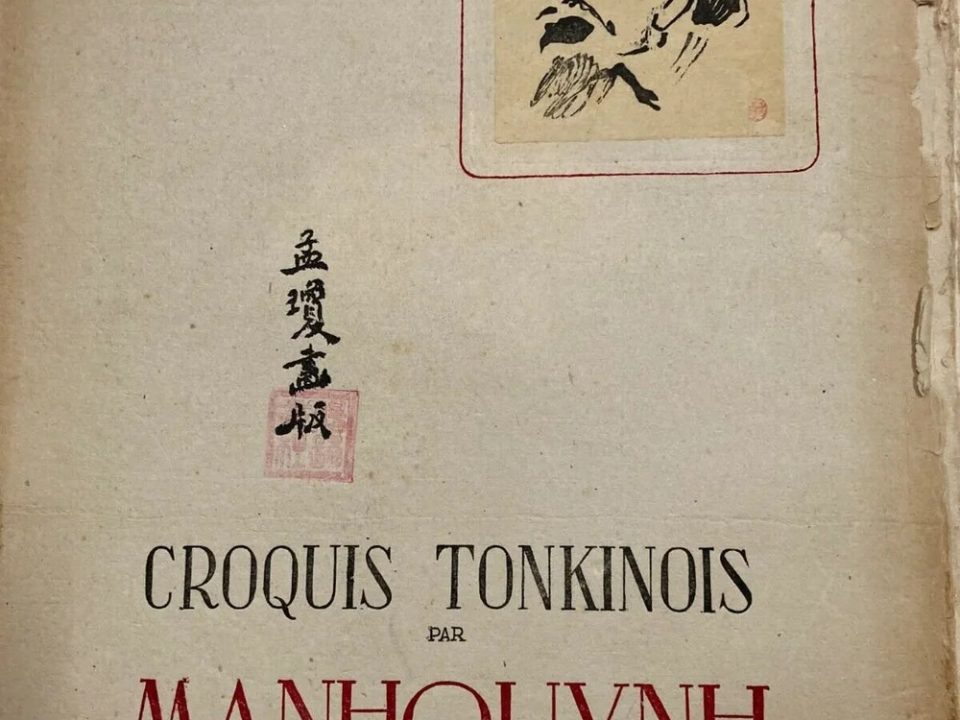
(nxbkimdong.com.vn) Graduating from the Indochina College of Fine Arts in 1942, painter Ngô Mạnh Quỳnh was among the first generation of Vietnamese artists trained in Western art education. Beyond his lacquer and silk paintings that contributed to contemporary Vietnamese fine arts, he was also a pioneer in many fields—not only in visual arts but also in book and newspaper illustration, publishing, comic books, posters, cultural products, and even puppet making and puppetry performance. Yet perhaps he is best known for the honorable title: “Painter of Childhood.”

Four illustrated books by Ngô Mạnh Quỳnh reemerge after more than seven decades.
This beautiful and noble title was earned primarily thanks to the books he illustrated before the August Revolution: nursery rhymes, children’s stories, games, and especially the fables of La Fontaine. These fables were translated into Vietnamese by Nguyễn Văn Vĩnh with a witty, natural flair—and their humor and folksy charm were amplified by Ngô Mạnh Quỳnh’s distinctively Vietnamese illustrations. One could say these were foreign fables that had been masterfully translated and illustrated. But it’s equally true to say that these were universal treasures reimagined by Vietnamese creativity through language and art. In fact, the latter may be more accurate—because Quỳnh’s drawings were not merely illustrations, but creative extensions that enriched the stories.
As poet Vũ Đình Liên, a close friend of Trần Văn Lưu and Ngô Huy Quỳnh, once said:
“Back then, students were able to memorize La Fontaine partly thanks to Ngô Mạnh Quỳnh’s illustrations in this fable collection.”
Yet for a long time, these once-famous books—which were reprinted many times due to Quỳnh’s compelling illustrations—were absent from the Vietnamese book market. It wasn’t until 2017, the 100th anniversary of his birth, that the “vein of artistic ore” that is Ngô Mạnh Quỳnh began to resurface. Since then, this rich creative legacy has continued to be rediscovered and shared.
From La Fontaine’s Fables to Gulliver’s Travels (Qui li ve du kí), and When I Turn Eight to Children Sing, Children Play, his works have been gradually republished for 21st-century young readers.
Of course, over time many things have changed—materials, book dimensions, and formatting have been adapted to suit modern audiences. However, Ngô Mạnh Quỳnh’s original illustrations have been preserved with the utmost faithfulness to his spirit and intent. This dedication reflects the wishes and principles of the editors, designers, and production staff at Kim Đồng Publishing House—those entrusted with the honor and responsibility of ensuring these timeless books of the past continue to live on in the present.
Original link: https://nxbkimdong.com.vn/blogs/diem-sach/huy-toan-hoa-si-ngo-manh-quynh-va-nhung-cuon-sach-xua-khong-cu